
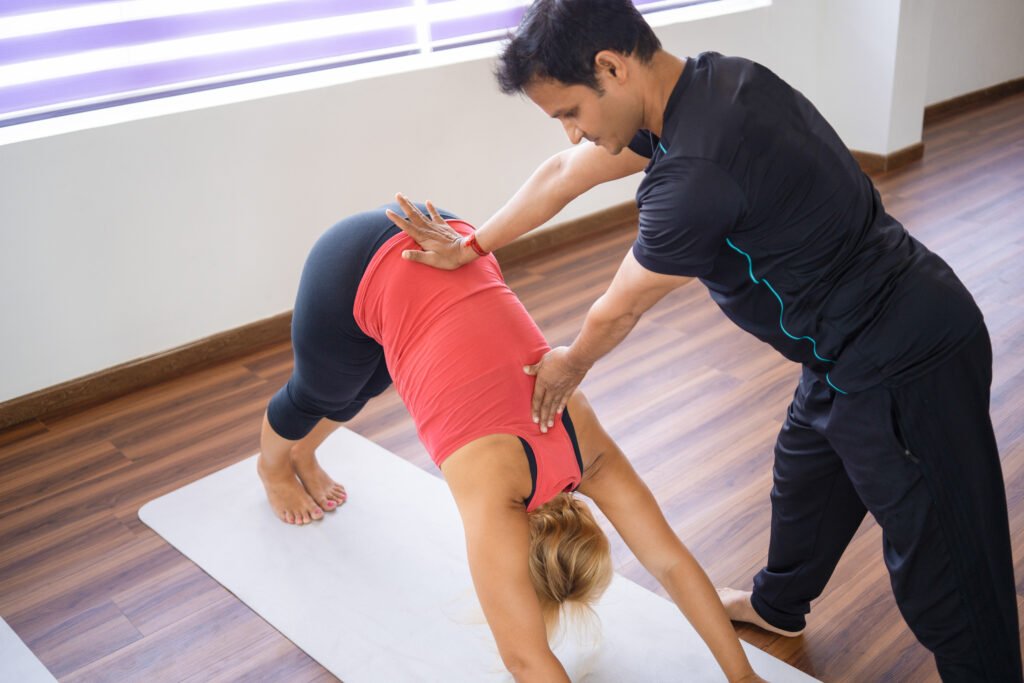
Yoga, a practice that involves physical yoga poses, meditation, and controlled breathing, has proven effective in treating back pain and works especially well when incorporated into a treatment plan under the guidance of a physiotherapist in Paschim Vihar, along with physiotherapy and chiropractic care
When practised correctly and under professional guidance, yoga supports spine health and long-term pain relief.
Benefits of Incorporating Yoga into a Back Pain Treatment Plan
Adding yoga to a back pain treatment plan recommended by a physiotherapist in Paschim Vihar at Ideal Spine Posture clinic offers several benefits:
- Stretches and strengthens the muscles in the back and surrounding areas
- Improves flexibility and range of motion in the spine
- Reduces stress and muscle tension that often contribute to back pain
- Improves posture and body awareness
- Increases blood flow to the spine and surrounding muscles
Here are 9 yoga asanas that can help reduce back pain:
Yoga can be an effective way to manage and relieve back pain. When incorporated into a treatment plan, it can help stretch and strengthen back muscles, improve flexibility and range of motion in the spine, and reduce stress and tension in the body. Here are 10 yoga poses that may help alleviate back pain:
- Child’s Pose:
This pose is a great way to stretch the lower back muscles. To begin, stand on all fours with your wrists under your shoulders and your knees under your hips. As you exhale, bring your hips back toward your heels and extend your arms in front of you. You can stay here for as long as you like, taking slow, deep breaths.
- Cat-Cow Pose:
This pose is great for stretching and strengthening the back muscles, as well as improving spinal mobility. To start, stand on all fours with your wrists under your shoulders and your knees under your hips. As you inhale, arch your back and look toward the ceiling, allowing your belly to drop toward the mat. As you exhale, round your back and tuck your chin toward your chest. Alternate between these two movements, taking slow, deep breaths.
- Downward-Facing Dog:
This pose stretches the muscles of the back, shoulders, and legs and can help improve posture. To start, stand on all fours with your wrists under your shoulders and your knees under your hips. As you exhale, lift your hips and straighten your legs, creating an inverted V shape with your body. You can keep your knees bent if this is easier on your back. Take slow, deep breaths while holding the pose.
- Cobra Pose:
This pose strengthens the back muscles and can help improve spinal flexibility. To begin, lie on your stomach, extend your legs back and place your hands near your shoulders. As you inhale, lift your chest off the floor and straighten your arms, keeping your hips on the floor. You will feel a gentle stretch in your spine. Hold the pose for a few breaths, then slowly lower back down.
- Upward-Facing Dog:
This pose stretches and strengthens the back muscles and can help improve posture. To begin, lie on your stomach, extend your legs back and place your hands near your shoulders. As you inhale, lift your chest off the floor and straighten your arms, keeping your hips on the floor. You should feel a slight stretch in your back. Hold the pose for a few breaths, then slowly lower back down.
- Low Lunge with Spinal Twist:
This pose stretches the muscles of the back and hips and can help improve spinal mobility. To begin, step your right foot forward and lower your left knee to the floor. Place your left hand on the floor for support and bring your right hand to your right knee. As you inhale, lift your chest and twist to the right, looking over your right shoulder. Hold the pose for a few breaths, then slowly return to center and repeat on the other side.
- Pigeon Pose:
This pose stretches the muscles of the back and hips and can help improve flexibility. To begin, start in a low lunge with your right foot forward. Bring your right ankle toward your left wrist and slide your left foot back. You can either remain upright or lower your chest toward the ground. Take slow, deep breaths while holding this pose.
- Seated Forward Bend:
This pose stretches the back muscles and can help reduce stress and fatigue. To start, sit on the floor with your legs extended in front of you. As you exhale, bend at the hips and reach for your toes.
- Locust Pose:
Locust Pose is a strengthening posture that works the back muscles as well as the hips and thighs. To perform this pose: Lie on your stomach, place your arms at your sides and keep your feet together. Use your back muscles to lift your head, chest, and legs off the floor. Hold this pose for 30 seconds to one minute, then release.
It’s important to listen to your body and practise only those yoga asanas that feel comfortable and safe for you. If you have any concerns before starting a yoga routine, always consult a physiotherapist. Remember to move gently and slowly, maintaining proper alignment throughout each pose.
If you experience any pain or discomfort, stop immediately and speak to a qualified physiotherapist in Paschim Vihar where expert care ensures safe movement, correct posture, and effective back pain management.